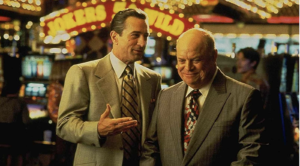
30 years later, Casino (1995) still fascinates audiences. Discover what Scorsese’s masterpiece teaches us about storytelling, power, and casino culture.
Few films have aged as gracefully as Martin Scorsese’s Casino (1995). Three decades after its release, the movie remains a masterclass in filmmaking, balancing grandeur, greed, and tragedy in a single cinematic package. Set in the glittering world of 1970s Las Vegas, the film offers more than just a tale of crime and corruption. It’s a meditation on power, loyalty, and the seductive illusion of control. As we look back 30 years later, Casino is a time capsule of the filmmaking craft at its peak. From its meticulous production design to its layered performances, it continues to shape how audiences and creators view the intersection of storytelling, morality, and spectacle, both on-screen and in modern entertainment.
A Look Back: The Story Behind the Film
Casino reunited Martin Scorsese with writer Nicholas Pileggi, the duo behind Goodfellas. The movie was adapted from Pileggi’s non-fiction book Casino: Love and Honor in Las Vegas, which chronicled the rise and fall of real-life casino operator Frank “Lefty” Rosenthal. Scorsese used that material to explore the following themes:
- Excess
- Betrayal
- Fate.
Robert De Niro stars as Sam “Ace” Rothstein, a meticulous gambling expert brought in to oversee the Tangiers Casino on behalf of the Chicago Outfit. His performance captures a man obsessed with precision, a living embodiment of order amid chaos. Opposite him, Joe Pesci plays Nicky Santoro, the volatile enforcer whose impulsive violence contrasts Ace’s methodical control. Sharon Stone’s portrayal of Ginger McKenna, a tragic figure torn between love, loyalty, and self-destruction, earned her an Academy Award nomination.
Together, their performances form a triangular study in ambition and downfall, framed by Scorsese’s kinetic camera work and Thelma Schoonmaker’s razor-sharp editing.
Visual Storytelling: Crafting the World of Vegas
One of Casino’s most enduring strengths lies in its production design. Cinematographer Robert Richardson and production designer Dante Ferretti recreated 1970s Las Vegas with dazzling authenticity. Neon lights, mirrored ceilings, and golden interiors evoke the era’s seductive allure while also hinting at its fragility.
Scorsese’s direction is both intimate and operatic. Long tracking shots glide through crowded casino floors, capturing the rhythm of gambling, the shuffle of cards, the clink of chips, the hum of machinery. The film’s iconic opening sequence, where De Niro’s character is engulfed in a car explosion, sets the tone: beauty intertwined with violence.
Every frame is packed with visual metaphors. The camera lingers on money as both a symbol of power and a curse. Scorsese’s mastery lies in making the viewer both dazzled and uneasy, as they are immersed in the spectacle while sensing the moral decay beneath it.
Narrative Structure: Dual Perspectives and Voiceover Brilliance
The dual narration, split between De Niro’s and Pesci’s characters, adds depth to the storytelling. Their competing viewpoints draw the audience into an almost documentary-style rhythm, offering context and commentary. It’s a technique Scorsese refined after Goodfellas, but here it feels more cynical, more reflective.
This layered narrative mirrors the structure of Vegas itself: multiple systems of power overlapping, each trying to outsmart the other. It’s a brilliant study of perspective and manipulation, which are essential lessons for filmmakers on how narrative voice can guide emotion and pacing.
Themes That Still Resonate Today
Thirty years on, the famous Casino 1995 film continues to resonate because its core themes remain universal. The film explores themes of greed, loyalty, control, and the illusion of permanence, concepts that transcend the world of organized crime.
- Greed and Power
- Control vs. Chaos
- Illusion and Reality.
From a modern standpoint, these themes also parallel the way digital culture presents an ideal of perfection, particularly in the entertainment industries, where glamour and authenticity constantly collide.
A Lesson in Character Study
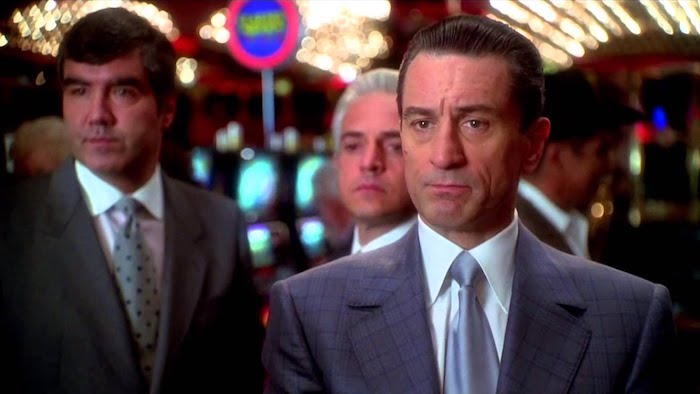
What truly elevates Casino is its character complexity. Scorsese doesn’t offer heroes or villains, only flawed humans driven by desire.
- Sam Rothstein is disciplined and intelligent, yet tragically blind to emotional nuance. His precision with numbers doesn’t extend to people.
- Nicky Santoro represents unchecked impulse, a force of nature that ultimately destroys everything in his path.
- Ginger McKenna embodies the cost of dependency and manipulation. She’s one of Scorsese’s most fully realized female characters, both powerful and vulnerable.
Their intertwined fates teach timeless lessons about ego, trust, and consequence.
Cultural Impact and Legacy
When Casino premiered in 1995, critics were divided. Some saw it as Goodfellas redux; others hailed it as Scorsese’s grandest epic. Over time, however, its reputation has soared. Today, the film is studied in film schools for the following reasons:
- Direction
- Editing
- Layered scripts
Beyond technical excellence, Casino also influenced pop culture’s depiction of Las Vegas. It shifted the narrative from glamorous escapism to one of moral complexity. The film helped inspire later works, such as The Sopranos and Breaking Bad, both of which examine corruption within systems built on illusion.
Its influence extends to modern cinema, the ever-growing platforms that provide a casino online, and television storytelling, where morally ambiguous characters and voiceover-driven narratives have become staples.
What We Can Learn 30 Years Later
Three decades on, Casino remains a mirror reflecting human ambition at its brightest and darkest. For filmmakers, it serves as a reminder of how visual storytelling can elevate a crime drama into a timeless tragedy. For audiences, it’s a meditation on how easily systems —financial, emotional, or social—can unravel under pressure.
From its casting to its editing rhythm, Casino demonstrates the power of detail. Scorsese’s relentless precision parallels Rothstein’s own obsession, creating a meta-commentary on artistry itself. The result is a film that’s not just about Las Vegas but about the nature of control and the fragility of success.

The Final Verdict: The House Always Wins
In the end, Casino (1995) is more than a period piece; it’s a cinematic cautionary tale about hubris and consequence. It celebrates craftsmanship while exposing corruption, offering lessons in both storytelling and humanity. Thirty years later, its message remains clear: power and perfection are illusions, and in the grand game of life, as in the casino, the house always wins. While today’s entertainment landscape may include the rise of casino online platforms and digital gaming experiences, Scorsese’s film reminds us that no algorithm or screen can replicate the raw emotion, moral tension, and cinematic power that Casino still delivers.