Poker shows up in movies again and again, but too often, it feels stuck in the past. Same smoky rooms, same dramatic pauses, same dead giveaways.
For a game built on subtlety and strategy, Hollywood keeps recycling the same tired moves. These clichés don’t just flatten the story; they make poker look less interesting than it really is. It’s time to drop the old tricks and give the game a sharper, smarter place on screen.
1. The Intensity of Poker Is Only Visible in Physical Casinos
Poker scenes in movies always go back to the same image: heavy lighting, fancy suits, tense silence, and players staring each other down across a felt table. Casino Royale is the best example! Bond and Le Chiffre trading glances, every move soaked in tension. It works once, maybe twice. But not every game has to play out in a marble-lined casino with champagne on ice.
Poker went online years ago. Big tournaments take place daily, with thousands of players sitting at virtual tables, watching the clock, and placing precise bets. These matchups don’t lose anything in intensity just because they happen through a screen. If anything, the pressure builds faster: there’s no room to read faces, only patterns and instincts.
Live dealer games bring the traditional feel into the mix. Real cards, real dealers, streamed in real time. You see the hand unfold as you would at a physical table, but you’re sitting at home.
Another thing about these sites is that they offer bonuses, such as no-deposit bonuses, which give players more to work with right from the start. Those curious about how these work can learn more on Insider-Gaming.com, where they will see plenty of casinos offering solid rewards just for signing up.
And maybe that’s where the next great poker scene lives: a quiet room, a laptop, and a player pulling off a perfect bluff with nothing but timing and nerve.
2. Impossible Poker Hands Happen All the Time
Movies love miracle hands. Royal flushes appear at just the right moment, four-of-a-kinds crash the table to decide everything in one move, and the hero always seems to pull the perfect card. It’s exciting, but it turns poker into something it isn’t.
Those hands almost never show up in real play. Anyone who has spent time at a table knows the game is built on long stretches of folding, small gains, and careful pressure. Wins come from managing risk and spotting weaknesses over time, not waiting for a once-in-a-lifetime draw. When films lean too hard on rare hands, they miss what actually makes poker tense: uncertainty.
3. Every Player Has an Obvious Tell
On screen, poker players give themselves away constantly. A twitch, a shaky hand, a sudden glance; something always slips.
Real poker doesn’t work like that. Most experienced players train themselves to stay still, neutral, and unreadable. Online games remove physical tells entirely, forcing players to rely on timing, bet size, and pattern recognition. Obvious giveaways are rare, and when they do appear, they’re usually misleading.
Moving away from exaggerated tells would deepen the story. Scripts could focus on subtle shifts: hesitation before a bet, a change in rhythm, or a line that doesn’t quite add up. That kind of tension feels smarter and gives characters room to think, adapt, and make mistakes along the way.
4. The Protagonist Never Loses a Crucial Game
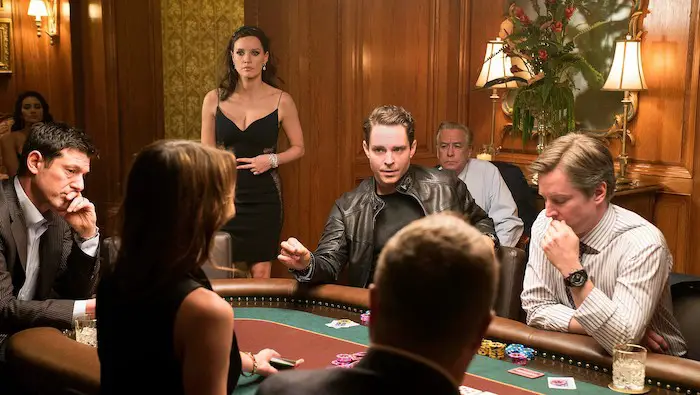
In poker films, the main character almost always wins when it counts. The final hand goes their way, the plan works, and the table breaks in silence. Ocean’s Eleven follows this pattern, wrapping everything up cleanly and leaving no space for doubt. It’s satisfying, but also predictable.
Poker doesn’t reward perfection. Even great players lose, often and painfully. Those losses shape how they play next, how they manage pressure, and how they grow.
Letting a protagonist lose changes everything. A busted session, a bad call, or a missed read can push the story forward in more interesting ways. Recovery, adjustment, and persistence tell a stronger story than a flawless win.
5. Poker Tables Are Full of Constant Trash Talk
In movies, poker scenes often turn into shouting matches. But the truth is: most serious poker is quiet. Players stay locked in, watching, thinking, and giving as little away as possible.
Too much talking can actually break rules. In many tournaments, excessive chatter can get you warned or penalized. For professionals, silence is part of the game.
Films don’t need to fill every second with words. A pause, a glance, or a slow bet carries more weight than another clever insult. Letting the silence do the work shows confidence, control, and pressure without spelling it all out!