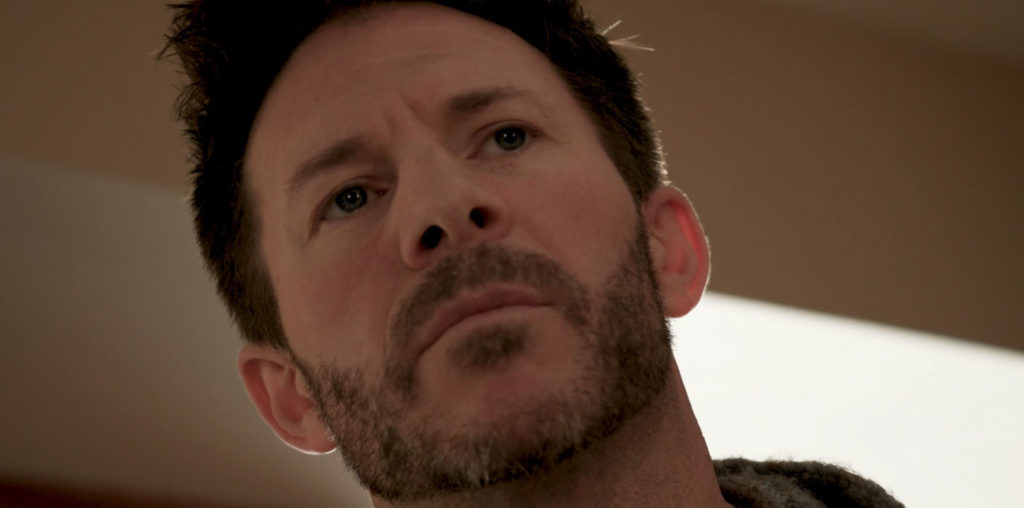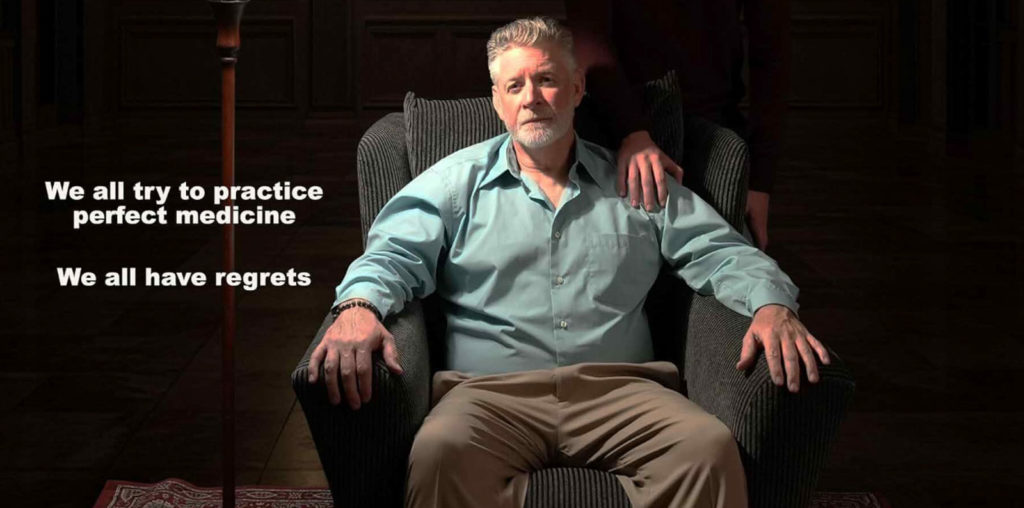
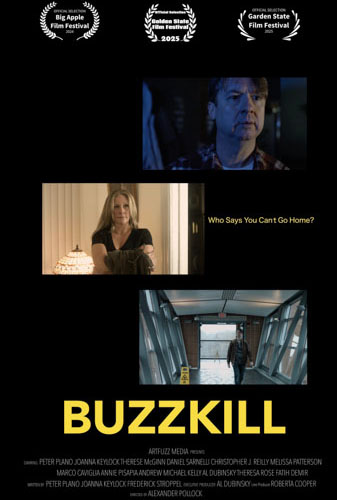
Director Alexander Pollock’s Buzzkill, written by Peter Plano, Joanna Keylock, and Frederick Stroppel, opens on a stage where Patrick Delaney (Peter Plano) gives his performance of a lifetime. So much so that an agent approaches Patrick and offers to take him out for drinks to discuss his future. The night spirals as Patrick’s drunken and defensive behavior leaves the unimpressed agent quietly backing away. By the next morning, Patrick is hungover and adrift in his cluttered New York City apartment when his older sister Jesse (Joanna Keylock) calls with news that their mother has suffered a heart attack and is in the hospital.
Already reeling from being fired from his restaurant job, Patrick hesitates to return home. Jesse berates him for his absence and forces him to confront the reality he has long avoided. Reluctantly, he makes the trip back, stepping into a family dynamic filled with unresolved tension. At the hospital, old grievances resurface as Patrick is faced with his mother’s fragile condition and the role he has played in distancing himself from the family.
As the visit unfolds, what initially appears to be a simple family emergency reveals itself to be something more deliberate. Patrick discovers that his return home functions as an intervention, not only about his stalled career and drinking but also about his pattern of avoidance. Surrounded by family members who refuse to let him retreat, Patrick must confront the gap between the life he imagined for himself and the one he is actually living, setting the stage for a reckoning that could reshape his future, or not.
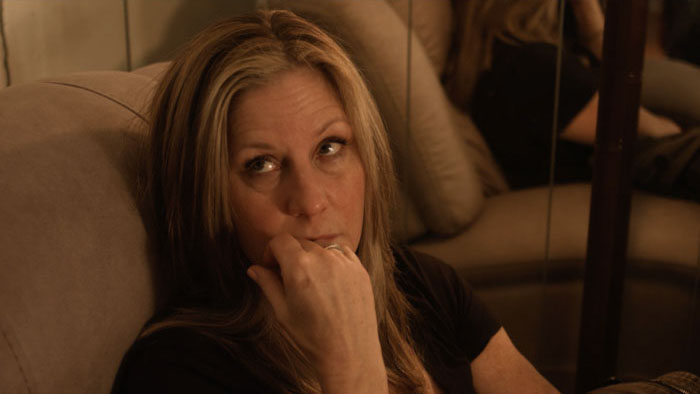
“Patrick discovers that his return home functions as an intervention…”
Where many of these well-meaning messages fall short is that they tend to be predictable and wrap up a little too neatly. What I love about Buzzkill is that it doesn’t do any of that. Look, I know interventions are important and have saved lives, but every intervention film doesn’t need to do that. Some can cross the line and make us laugh.
Peter Plano gives an amazing performance as Patrick. He’s a drunk with an unhealthy level of self-respect. I think, deep down, he knows he needs help, but just not under these circumstances, and not without letting his family feel they won. From there, the story calls out the hypocrisy of those in the intervention, where half of them should be getting help along with Patrick.
No fear, the ending is not bleak or nihilistic. It ultimately reflects the importance of family. In the end, Buzzkill is a tale of all those things you wish you could have said and done during an intervention.
"…Plano gives an amazing performance..."