The first six web series episodes of Quiet Anomalies shows itself as a series that is a short-form, micro-budget anthology that mixes supernatural moral tales, bromance comedy, internet-age paranoia and stoner-trip metaphysics into something distinctly homemade, earnest, and light hearted in spite of heavy themes Created by Nofriendo Productions, the show leans into the small cast doing, multiple roles and two hander moments in limited locations like room or cars. The work has raw edges, quick setups, and uses those constraints to carve out a quirky signature dialogue-based identity. What it lacks in scale, it compensates for with imagination and a willingness to go weird without apology.
I reviewed episode 6—Good Grief. The story sets the template: Quiet Anomalies isn’t here just to shock the consequences, guilt, and emotional fallout. This is a tale of a young man, Dylan, killed by a drunk driver, who happens to be one of his own friends. It’s a classic ghost-of-wrongdoing premise, built more on atmosphere and remorse than outright horror. The twist isn’t the haunting itself, which is in the form of a demonic chair. but the moral clarity behind it. The spirit isn’t merely vengeful; he’s the embodiment of everything ignored, dismissed, or laughed off until tragedy strikes.
What stands out is sincerity. In a genre overloaded with irony, this episode plays it straight, almost mournfully. While the production scale is modest, the quiet grief lingering in the final moments sets a surprisingly heavy tone for the anthology’s starting point.

“The twist isn’t the haunting itself… but the moral clarity behind it.”
Episode 2 is titled Tony. If The Delivery leans into supernatural guilt, Tony goes for the more grounded anomaly: the one inside people. Two buddies sit down over beers, reminiscing about their friend Tony, and the conversation takes on that specific rhythm of nostalgia crossed with uneasy revelation. This is the series at its most naturalistic—no ghosts, no portals, no monsters—just memories and a gradual peeling back of assumptions. The horror is subtle, thematic: how well do we actually know our friends? What happens to the space they leave behind?
The writing here is sharpest when it trusts the silences. The performers feel genuinely lived-in, and the episode proves Quiet Anomalies isn’t relying on supernatural gimmicks; it’s using them as lenses on human experience.
Episode 3 is Lefts Don’t Make a Right. Groundhog Day Meets Burger King Bromance. Episode three shifts gear completely. Two friends find themselves stuck in a looping daylight pilgrimage that ends up around a Burger King, and suddenly Quiet Anomalies is playing in the playground of Groundhog Day, rapping to songs they both know and classic Odd-Couple bickering. It works because the show doesn’t pretend to be bigger than it is. It knows it’s absurd, and embraces it. The time-loop joke could easily run thin, but the chemistry between the two leads keeps it buoyant. Their dynamic part roommate banter, part existential panic—gives the episode a comedic pulse that borders on bromantic.
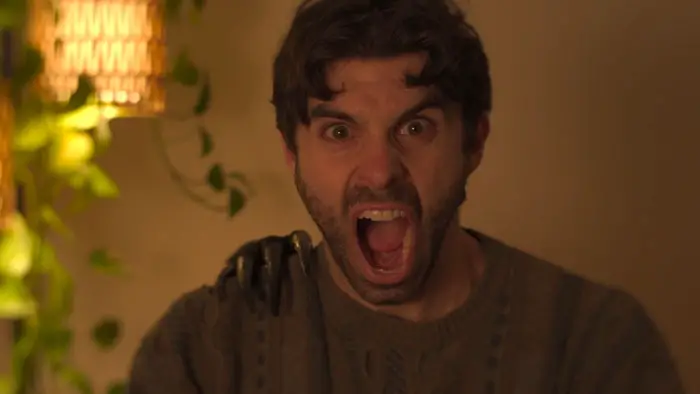
"…It knows it’s absurd, and embraces it."