Inventive movies usually build themselves around a strong protagonist, a gripping conflict, incisive dialogue or some irresistible blend of action and adventure. Guillotine, written by Nabor Cabanillas, Lisa Molenda, Melinda Molenda, Sara Vahabi, and director Ray Izad-Mehr, however, draws its stories from an inefficient execution machine. That’s part of its charm and black humour. This five-part historical portmanteau, in the spirit of the Amicus anthology films, without a wraparound host, treats the guillotine as a recurring object across eras and tyrannies, carving out stories. Sean Young narrates the whole thing with a wicked storyteller’s delight, guiding us through centuries of bloodshed and emotion.
Guillotine opens appropriately in France, where the sense of humour is established. Dr. Guillotin (Laurent Andruet) is the kind of earnest inventor who thinks he’s helping humanity by creating a “cleaner” execution method. But he soon realizes he’s invented a monster. John Fantasia plays the doomed Louis XVI like a petulant white-faced man-child speaking lines like Tom Hulce in Amadeus. He thinks a sharp-angled blade might solve all his problems, but suspects that giving it his own name would be bad for his image.
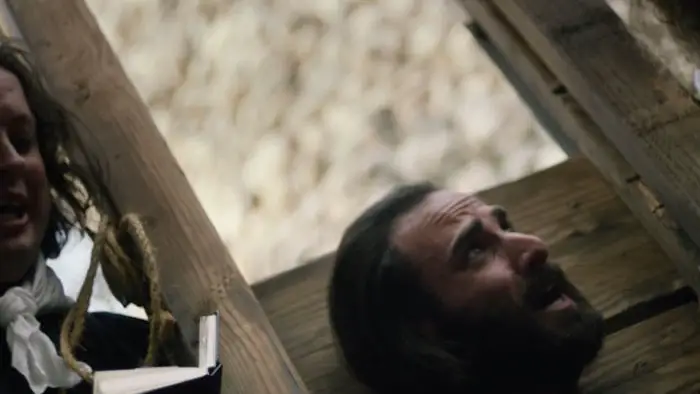
“…centuries of bloodshed and emotion.”
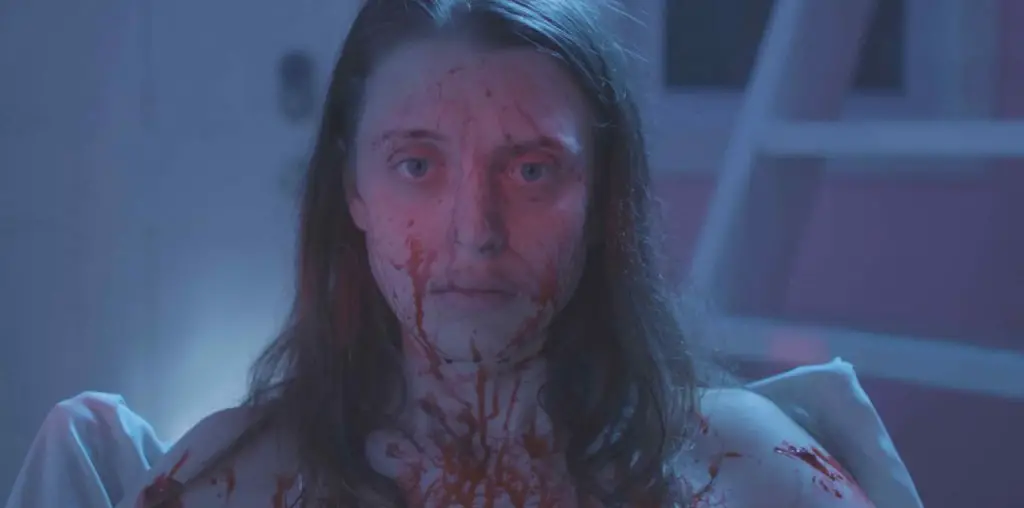
One of the genuinely impressive touches, pun not intended, is the well-executed practical effects with some tastefully placed CGI. There are moments when the film cuts to the eyes of the condemned, staring straight at the descending blade, recalling the old Hammer Films close-ups where fate is seconds away and the world freezes. These shots give the film an emotional quality, especially in the stories with doomed lovers and the Algerian section with Yasmine (an ethereal Sashah Askari), whose only crime is that she thought. This section juxtaposes empathy with a later, cold efficiency by a “Man of God,” Haskell V. Anderson III, who serves as a generational executioner, building the device during the night for use in the morning, even with the help of the doomed.
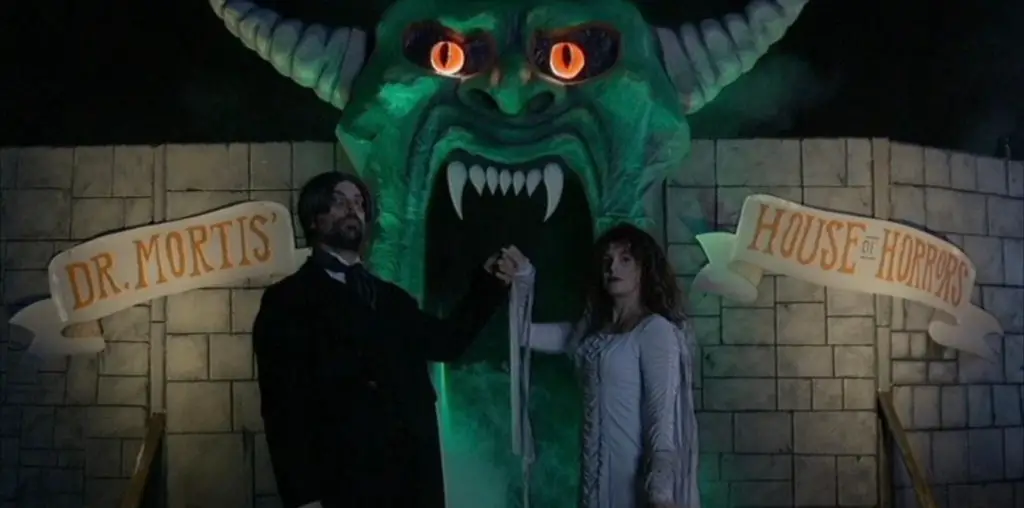
The middle segments of Guillotine keep things lively, energetic, and stylistically bold. Even when the stories feel thin, the creative choices keep you engaged. It’s inventive filmmaking in the sense that it wants to entertain above all else, then preach history. The tone is macabre and often funny, like a darker, more grown-up version of The Adams Family or illustrations by Edward Gorey and Gahan Wilson. The film is never dull, and it’s a refreshingly different style of storytelling.
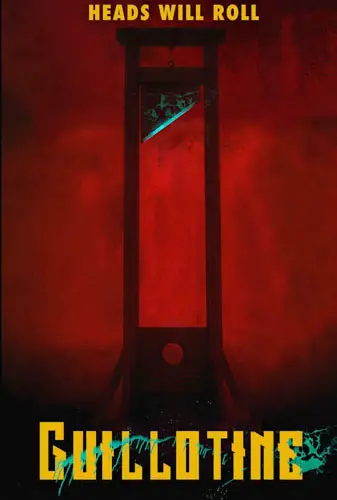
"…inventive filmmaking in the sense that it wants to entertain above all else..."