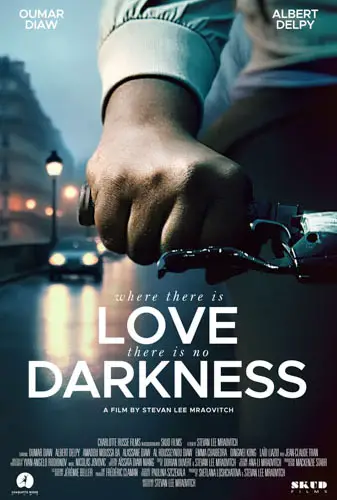
Where There Is Love, There Is No Darkness tells the story of a Senegalese migrant named Seydou (Oumar Diaw) working in Paris to send money back home to his pregnant wife. Writer/director Stevan Lee Mraovitch presents a plot full of the desperation of migrant workers to survive racism, exploitation, isolation, and the constant fear of deportation. Seydou and his friends, who are fellow migrants, most of whom are not properly documented, work as bicycle deliverymen. They are employed by an unscrupulous Asian man who mysteriously disappears with their money and blocks their bank accounts.
Living in a strange land far from home, Seydou must find a way to survive with dignity and integrity in a situation that is threatening to strip them away. With the birth of his child imminent in Senegal, he struggles to keep his spirits up and hope alive, especially when he speaks on the phone with his wife Aminata (Ramata Sow). One of his deliveries takes him to the home of an elderly, reclusive widower named Albert (Albert Dellpy). Despite drowning in his own troubles, Seydou senses the old man needs help and steps in to assist him with cooking and basic caregiving. This act of kindness sparks a friendship that buoys the spirits of the men in a fellowship that just may save them both. Seydou’s unexpected connection to Albert shines a light in the darkness that threatens to consume him.
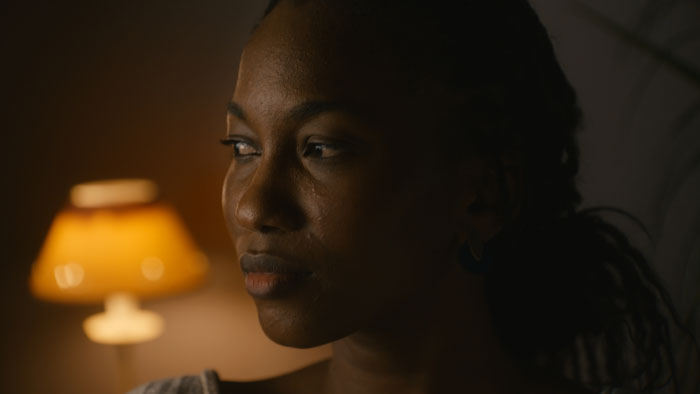
“…Senegalese migrants in France desperate to survive racism, exploitation, and isolation…”
Cinematically, the images and sounds of Where There Is Love, There Is No Darkness are precise and effective. The pace is slow and requires a thoughtful, attentive audience. Spaces are marked with silent meditation in the sadness and isolation Seydou feels on his lonely bike rides and in empty rooms. A significant length of the runtime is simply this, and not as much dialogue or movement. Diaw’s performance is a study in subtle conveyance of emotion. We see the desperation in his eyes as he tells Aminata on the phone that all will be well. Paris seems to him less a city of light and more like the end of the world. This focus on emotion over action is an unfamiliar mode for American audiences, and along with subtitled French dialogue, it requires full attention to stay engaged. This is not a film one can absorb while doom-scrolling the latest nightmares on their phone.
Mraovitch discusses his inspiration and how he was able to complete this project in 15 days with a €200,000 micro-budget. “This film was born out of a personal conviction: to explore how unlikely connections can heal the traumas of migration, memory, and isolation…we embraced the constraints as creative freedom, using real locations, a tight ensemble, and close collaboration to keep the story intimate and raw.” The title we are told is quoted out of an African proverb from Burundi, a place that has endured horrific ethic violence and genocide. If anyone should know about finding light in darkness, it is the Burundians.
One can find a quiet, poetic grace within Where There Is Love, There Is No Darkness. Seydou seeks equilibrium as the “righteous man beset on all sides by the inequities of the selfish and the tyranny of evil men” (apologies to Tarantino). He feels that he is the lamb being led to slaughter, until he sees that sometimes he is the shepherd.
"…one can find a quiet, poetic grace within..."