The Healing belongs squarely to the genre wave of Folk horror that blends the psychological of exploring cults and fractured identity. Yet, it stands apart through its contemporary Russian setting, where many pictures of this style dwell on indoctrination, often emphasizing ideological brainwashing or suburban decay. The Healing roots its story in the ancient soil of rural mysticism, where belief, guilt, and madness exist.
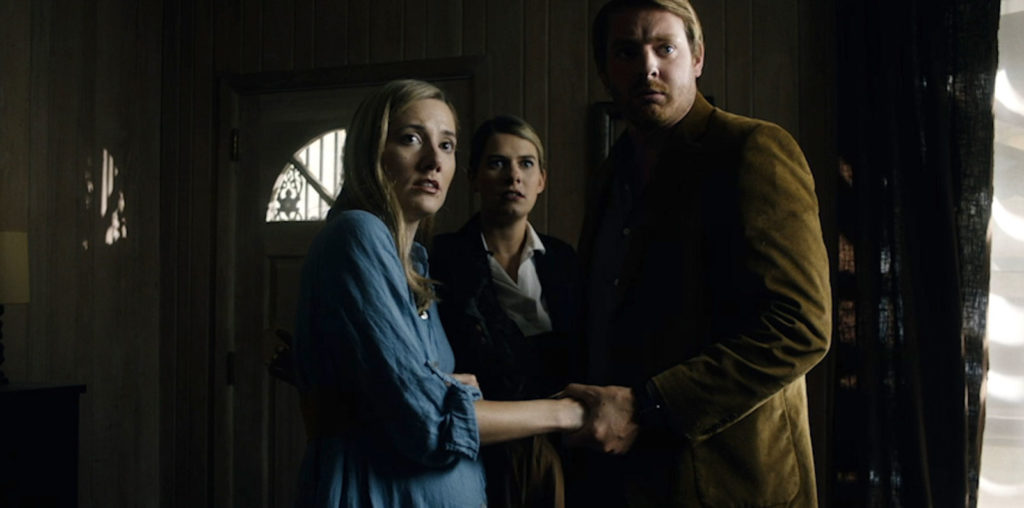
The film opens with Lyuba (Alyona Mitroshina), a young woman trapped in a cycle of domestic abuse and emptiness. Her husband Sergey (Vyacheslav Chepurchenko) is rich, violent, belittling to her, and quick to use having faith in him as another weapon. When Lyuba’s friends, the mystic Zoya (Ekaterina Solomatina) and party girl Sveta (Victoria Skitskaya), invite her to join them on a rural retreat led by a charismatic spiritual healer named Danila (Wolfgang Czerny), she accepts, but not out of curiosity, more to have a ‘break’. What follows is a descent into ritual, confession, and dreamlike horror, where the line between healing and possession vanishes.
Redemption is promised through pain, and the human soul is both the patient and the battlefield. The Healing is like Midsommar, the original The Wicker Man, and The Lodge, yet its Eastern European sensibility changes the tone. The Russian wilderness is not pastoral, and faith is not utopian but steeped in centuries of superstition and penance. You must suffer in life to live.
Alyona Mitroshina’s performance gives Lyuba a fragility that never collapses into cliché. Her face is tired yet luminous and searching, reflecting a woman on the verge of spiritual combustion. Through her eyes, one sees her become trapped in the state where trauma, hallucination, and belief bleed into one another. Wolfgang Czerny’s Danila, the shirtless, drum-beating leader, is equally fascinating, all charm and menace wrapped in the rhetoric of salvation. His sermons sound half-biblical, half-occult, suggesting that the cult’s rituals may have pagan roots buried under layers of Orthodox guilt.
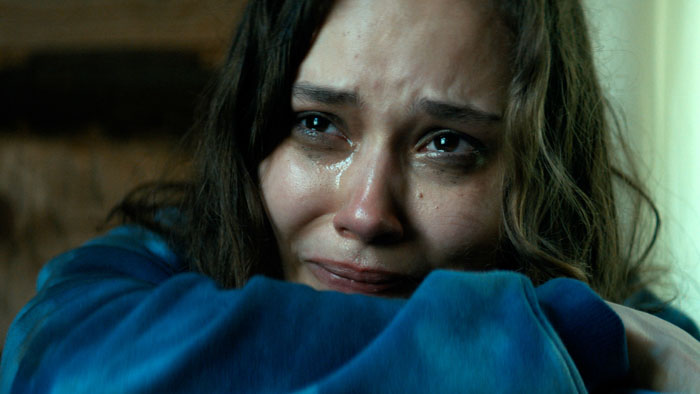
“Redemption is promised through pain, and the human soul is both the patient and the battlefield.”
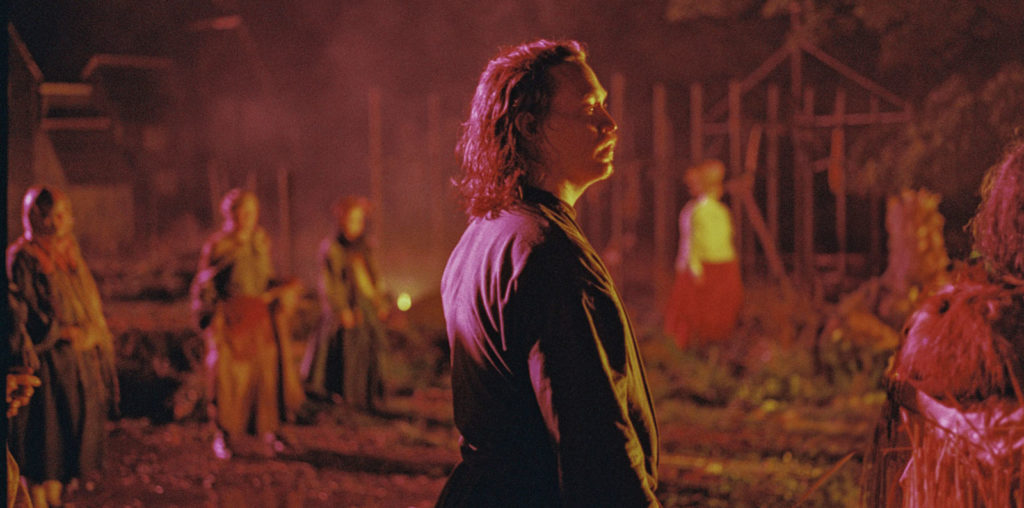
Cinematographer Andrey Tsvetkov frames the countryside as a landscape of frozen dread. Muted greys and browns dominate the palette, broken occasionally by blood-red fabric or candlelight that flickers like dying faith. The visual language evokes both Soviet realism of the past and folk horror, grounding the supernatural in poverty and isolation. When the community performs its “healing” rites, symbolic purges of pain through chanting, smoke, and self-flagellation, it is buried with only the head exposed. The camera lingers on the images, especially in the evenings
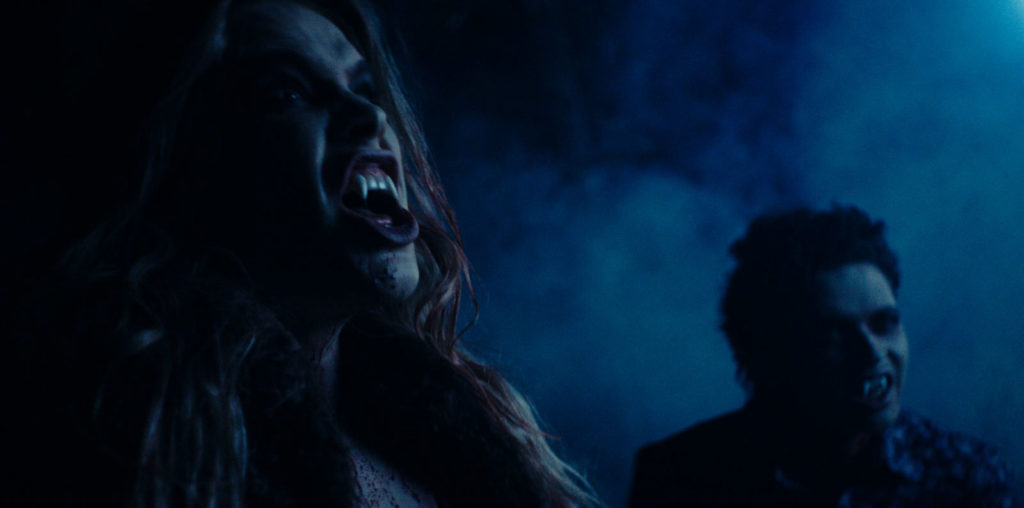
Director Denis Kryuchkov wisely allows some of the film’s mystical elements to remain deliberately opaque, forcing the audience to interpret whether Lyuba’s visions are genuine hauntings, such as the appearance of a CGI mystical smoke being, or symptoms of trauma. This ambiguity gives The Healing a rhythm: we’re never sure if we’re watching an exorcism, a nervous breakdown, or the birth of a new self. This is illustrated literally as Sveta (Victoria Skitskaya) believes she is about to give birth after one such ritual.
Yet, for all its symbolism and restraint, the film never loses its emotional urgency. Beneath the esoteric imagery lies a clear story about abuse, manipulation, and the hunger for transcendence. Lyuba’s journey echoes that of countless victims who seek solace in movements that promise purification but deliver only submission
The Healing has a weakness in its pacing that can verge on glacial. Some sequences linger too long, and certain symbolic gestures (a bird trapped indoors, the recurring motif of fire) are hammered a little too insistently. The film’s control over tone and atmosphere is remarkable; he builds dread not through shock but through erosion of faith, sanity, and identity.
By its final act, The Healing abandons the literal altogether, plunging into full surrealism as Lyuba confronts the demons, which are both real and imagined, that have governed her life. Whether she is saved, destroyed, or reborn is left unresolved. What endures is the sense that belief itself is the most dangerous drug, and that healing, in the wrong hands, becomes indistinguishable from possession. For audiences willing to surrender to its rhythm, the experience is unnerving.
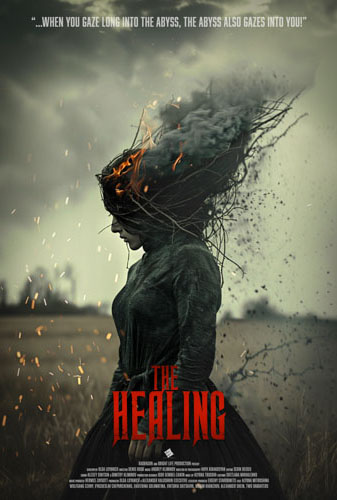
"…Beneath the esoteric imagery lies a clear story about abuse, manipulation,"