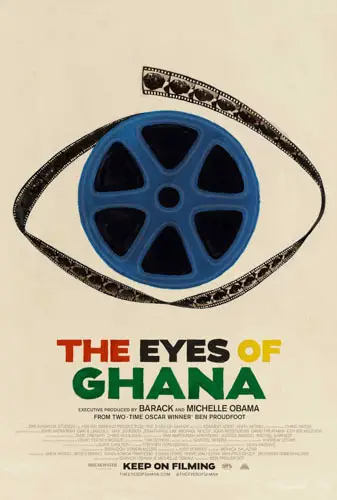
TORONTO INTERNATIONAL FILM FESTIVAL 2025 REVIEW! Director Ben Proudfoot’s The Eyes of Ghana is an interesting documentary featuring a compelling central character. Through high production values it tells an important but mostly forgotten story. It centers on Chris Hesse, a 93-year-old man who was essentially Ghana’s documentarian for decades. During that time, Ghana obtained independence, and its first president, Kwame Nkrumah, attracted worldwide attention, calling for the independence of all of Africa from colonial rule. Hesse captured the charisma and dynamism of Nkrumah and the transformation of the Gold Coast from a British colony to the Republic of Ghana, along with the attendant joy and struggles.
Nkrumah achieved fame on the world stage in the 1960s, not only for shepherding his country through independence, but for his leadership and pan-African ideals, which included dreaming of a United States of Africa. His education in the US exposed him to American ideals, including the power of film. Since his own country didn’t have a film culture, when he got into a leadership position there, he hired Chris Hesse to document all manner of things in Ghana. Hesse produced many short films about Ghana and followed Nkrumah wherever he went, including meetings with world leaders like John F. Kennedy.
“…Hesse is still alive and on a quest to recover and restore copies of his films from the negatives…”
While the US took a great interest in Nkrumah and courted him for a partnership, Nkrumah also had socialist leanings and, at the same time, was entertaining diplomacy with the Soviet Union. He eventually became more authoritarian, repressing opposition, and installed himself as president for life. He was deposed in 1966 after a coup, and there are rumors (but no hard evidence) that the US CIA was involved. After the coup, the new leaders destroyed all of Hesse’s films, and with them, much of the historical legacy of Ghana.
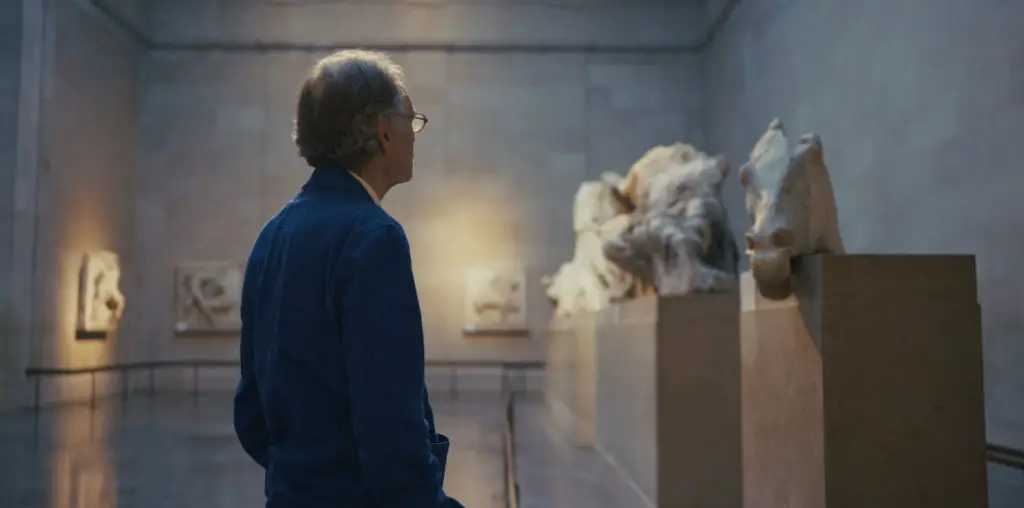
The core of the drama in The Eyes of Ghana is that Hesse is still alive and on a quest to recover and restore copies of his films from the negatives that were stored in London, where they had been sent for processing. He’s also kind of passing the torch to Anita Afonu, with whom he chats on camera, but is also a producer on the film. At the same time, he’s teaching a new generation of students about their history and the craft of filmmaking. As a kind of metaphor, the film shows us the dilapidated cinema, The Rex in Ghana’s capital, Accra. It fell into disrepair, along with the film traditions of the country. We meet Edmund Addo, who lives in the theater. The filmmakers set about interviewing Hesse, helping him to restore some of his films, and restoring The Rex to screen them.
"…looks and sounds amazing, a testament to Proudfoot..."