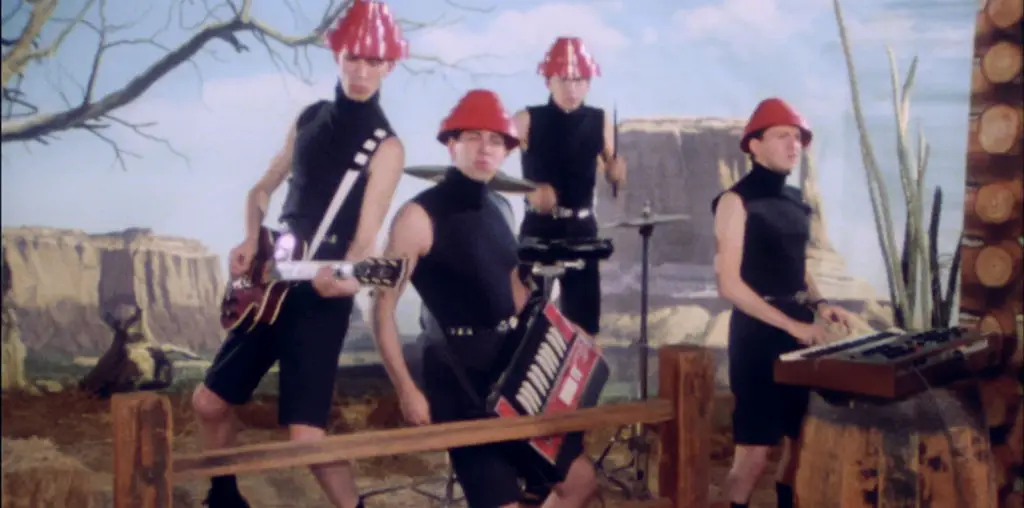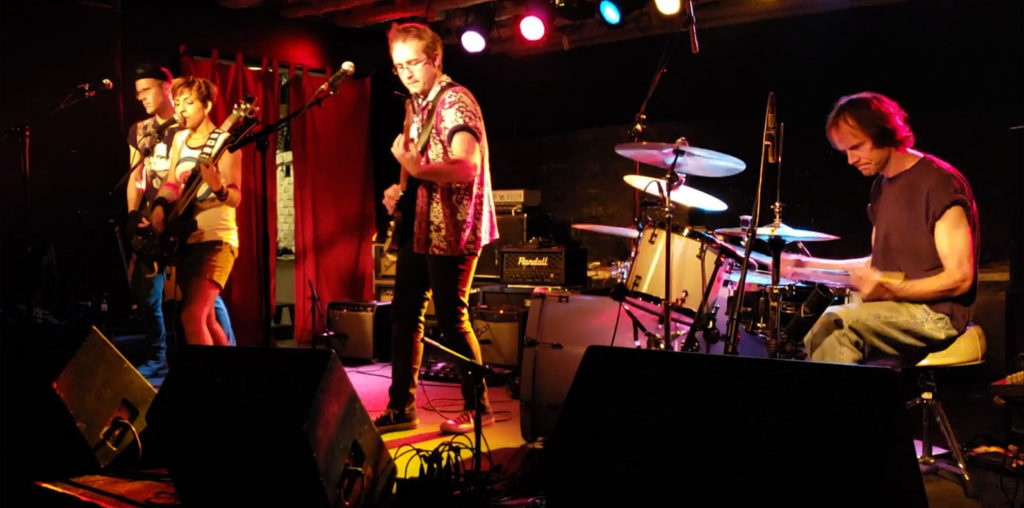
We finally get a good view of a New York cultural giant who towers over the skyscrapers in the outstanding, beyond words documentary Monk In Pieces, written and directed by Billy Shebar and David C. Roberts. It is all about artist Meredith Monk, the 20th-century visionary who explored non-verbal voice work twined with dance, theater, and filmmaking for decades. A lot of what is recognized today as performance art or multi-media installations has its roots in Monk’s work on the dark side of the moon of off-Broadway.
Shebar and Roberts include the scathing reactions by the theater critics at the time to Monk’s way-way out there shows. “That is not opera!” cried one such critic shrilly, with the level of snarkiness of the others turning comical quickly when the work itself is seen. What was unfathomable long ago makes total sense now. Monk is interviewed, along with friends and fellow artists like David Byrne and Philip Glass, talking about back in the day and their respect for what Monk was discovering.
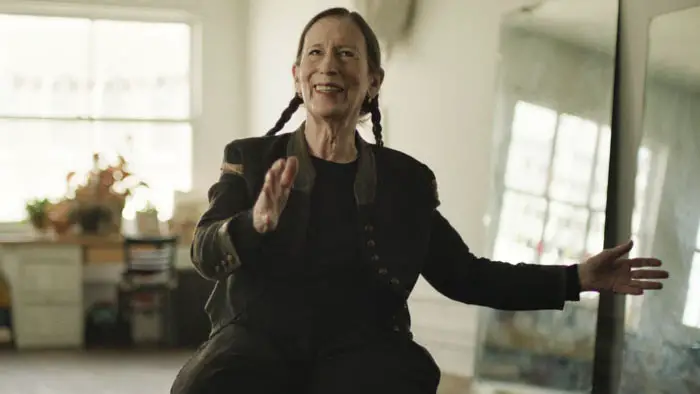
“It is all about artist Meredith Monk, the 20th century visionary who explored non-verbal voice work twined with dance, theater and filmmaking for decades.”
Glass worked to support his revolutionary composing by driving a cab, while Monk supported her craft as an artist’s model. Byrne enlisted Monk to help on a key scene in his movie True Stories. Björk covered one of Monk’s songs, “Gotham Lullaby,” and speaks of Monk’s influence on her early work. And in between the high tales of downtown adventure, there are these images of Monk’s daily routine in her apartment in the city. The decor is completely old school New York, just like Monk, with its stacks of books and brick wall landscapes in the windows. It is glorious.
The title credits for Monk In Pieces carry the subtitle “A Concept Album,” which is perfectly inappropriate in the most Monkian way. No, there isn’t any obvious difference structurally between this and other great documentaries; it doesn’t discard interviews and subject concentrations for a series of songs sung in no language at all. However, it works the same way Monk publicized certain performance pieces as operas, which critics pointed out weren’t, but obviously were, just not the kind they were used to.
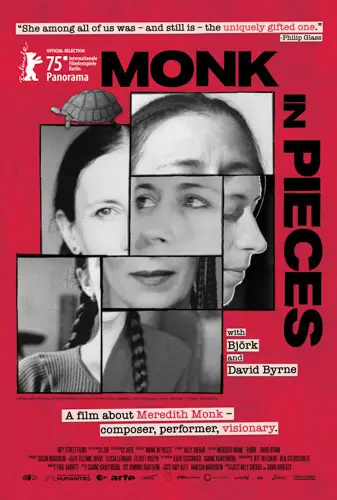
"…achingly brilliant and needs to be stampeded to immediately..."