Writer-director Julia Max’s ambitious feature horror debut, The Surrender, moves so assuredly towards the inevitable conclusion that it’s easy to forgive the film’s missteps. On-the-nose dialogue and over-the-top theatrics be damned – Max’s handling of relentlessly mounting dread, as well as eliciting a top-notch performance from her lead, more than makes up for the stumbles. In other words, surrender yourselves to this ink-black trip into hell, especially if you’re fans of Shudder’s cinematic oeuvre.
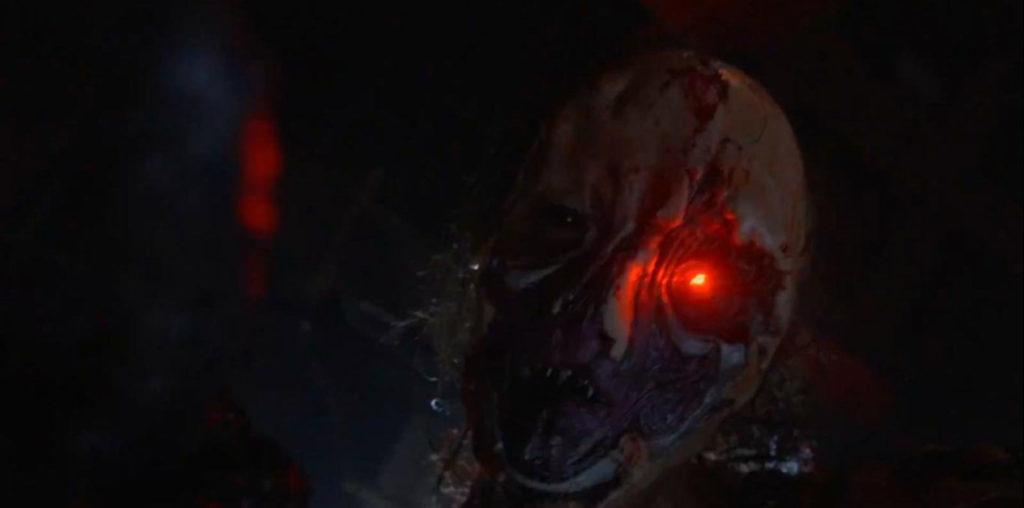
The opening frames of The Surrender instantly warn of things to come: a man, naked and twisted, ribs and spine protruding, seems to be gorging on something, and sharp spikes pierce through the skin of his back, and… well, it would be a bummer to reveal this early spoiler. As a pleasant surprise, for the most part, Max opts for “restrained” over “overwrought”, taking her time to get back to that grisly point, favoring character development over hammering you over the head with dismembered body parts.
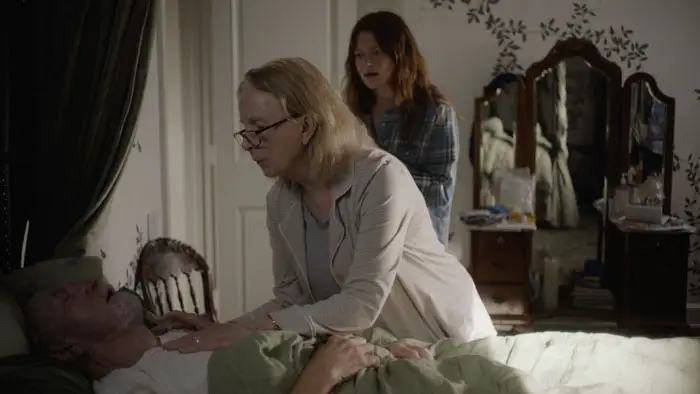
Megan (Colby Minifie) returns home to help her resentful mom, Barbara (Kate Burton), take care of ailing patriarch Robert (Vaughn Armstrong). Soon, Megan discovers there’s something wrong with mom, something way darker than bitterness over her daughter’s recent absence. Megan discovers teeth in a little sack. Barbara resorts to voodoo, like tearing out chunks of her hair, instead of giving her husband the correct morphine dosage. When he finally passes away, Barbara wants to “bring Robert back.” “From where?” Megan asks.
Screenshot
“Megan returns home to help her resentful mom, Barbara, take care of the ailing patriarch Robert.”
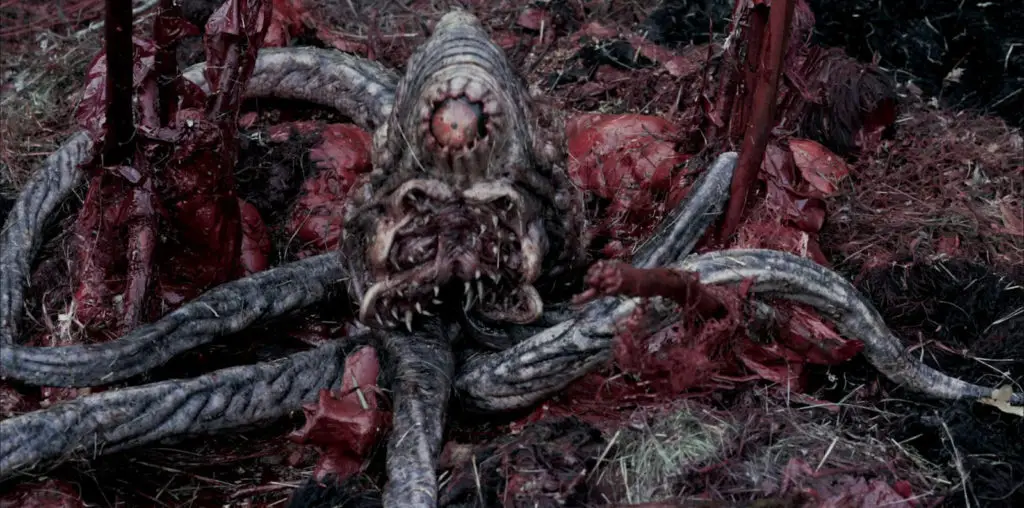
And so commences the resurrection ritual. Though deeply skeptical (“This is f**king crazy”), Megan eventually succumbs – mom shelled out all of their money on this “séance,” after all. They burn all of his possessions, clear out the rooms, fill them with incense, candles, and crystals, and Barbara guilt-trips her daughter for abandoning them the entire time. The “nameless man” (Neil Sandilands) arrives, and the film’s second half descends rapidly into madness, as they go through several stages of the titular surrender. Those involve a cocktail of tears and blood and, yes, dismembered limbs, as well as strong allusions to hell and the damned being brought back. The only thing protecting Megan from a horrific demise is a narrow circle they drew on the floor. I’ll let you discover whether or not the mother-daughter teams succeed in their unconventional quest, but I will say this: the film acts as a supreme cautionary “don’t try this at home” tale.
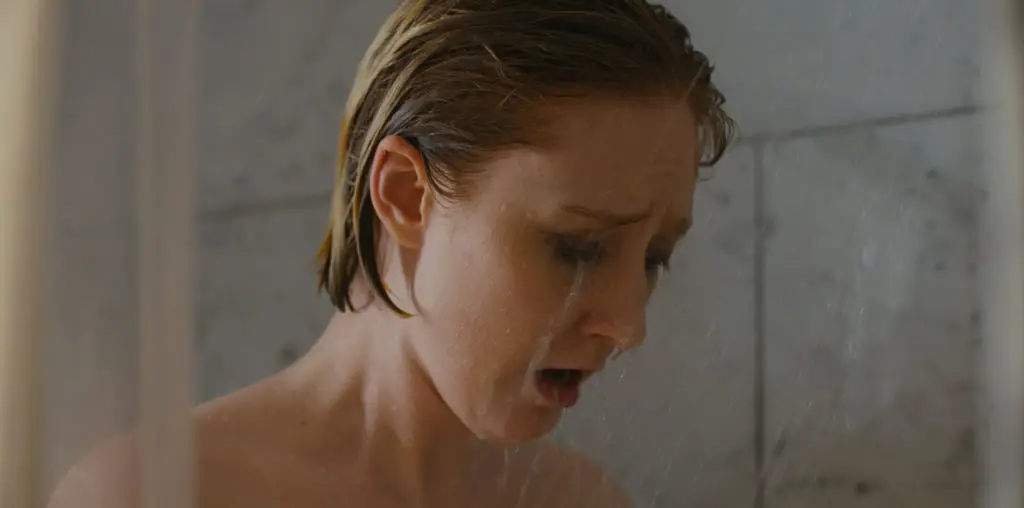
Surrendering is a key theme throughout The Surrender: to belief, to dementia, to grief, to hell itself. It’s also about loss, familial resentment, the need to let go. Minifie masterfully guides you along with her into the darkness, her reactions ranging from incredulous to defiant, and you never question her descent – because she’s desperate, because she loves her mother, because she feels guilty for perhaps neglecting family in the direst of times. Kudos to Max for conjuring genuinely unsettling, Boschian images with a limited budget.
Her dialogue, on the other hand, could have used some polishing, especially because Max keeps her characters in medium shots for lengthy periods of time, with a minimum of intercutting. The mother and daughter’s back-and-forth early on, despite the actors’ best efforts, feels stilted, overwritten. Megan’s conversations with her imaginary deceased father are redundant, and I’d say the same about the, ugh, flashbacks, if they weren’t a crucial part of the narrative.
Blunders aside, Max’s craft is undeniable, as is her ambition. She clearly has great chemistry with her amazing lead. Horror fans will appreciate the grotesque examination of grief that is The Surrender. I eagerly await what the talented women at the helm of this project are up to next.
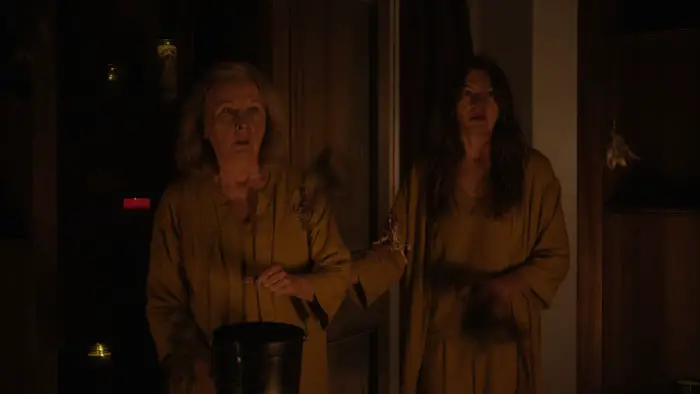
"…surrender yourselves to this ink-black trip into hell..."