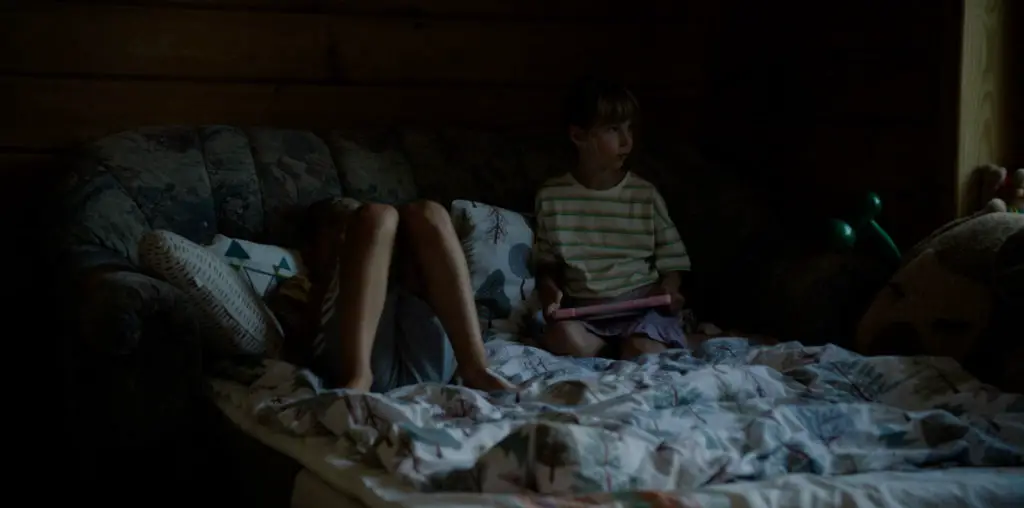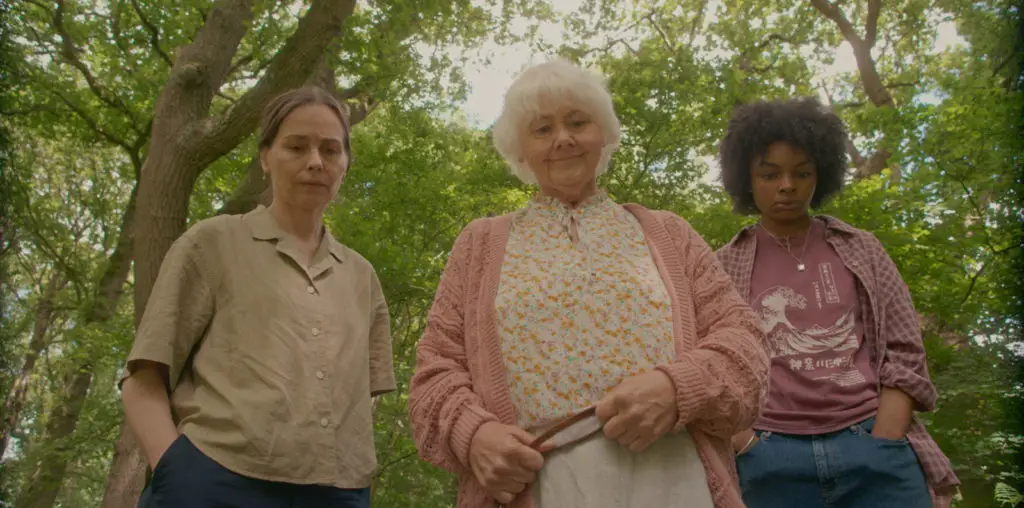
Laurynas Bareisa’s Drowning Dry, out now across the United States, offers counterprogramming to the typical bombastic summer fare. The Lithuanian set drama aims to absorb and intrigue, while offering something as natural, interesting, and yes, frustrating as real life. The story involving two sisters and their respective families gets quite heavy, but it is not without a sense of fun. So let the filmmaker guide you through the twists and turns of producing a film that’s full of them.
Film Threat: The English title, Drowning Dry, offers a stark and curious image upon first hearing it. How do you think that intriguing dissonance relates to the narrative and characters?
Laurynas Bareisa: When I first heard about this condition, I was very much intrigued by the possibility of suffocating while not underwater. This paradoxical situation reminded me of human relationships, especially in families, where connections deteriorate and people grow apart, while maintaining seemingly calm exteriors. Also, the word “dry” made it sound somehow inevitable, like you cannot escape drowning even if you are on shore. That it is just like all the random, tragic events in life. Talking about random deaths – while writing, I used to drift back to Final Destination sometimes. I even referenced it in one scene.
FT: There is a sudden and unexpected shift at a specific moment. This winding back in on itself then offers a new perspective on just about all the adult characters. Was there ever a worry in writing or shooting Drowning Dry that this jump would confuse or alienate viewers?
LB: Absolutely, I expected half the audience to stand up and leave the cinema after the first time jump. In the end, I decided just to run with it, because you never know how the real audience will react if you are doing something not tested. I was very much relieved and grateful that viewers didn’t abandon the theater. After screening it a bunch of times and talking with people, I realised that it was not a big problem after all. People are quite used to difficult narratives in the real world. Making sense of conflicting storylines is part of our daily experience.
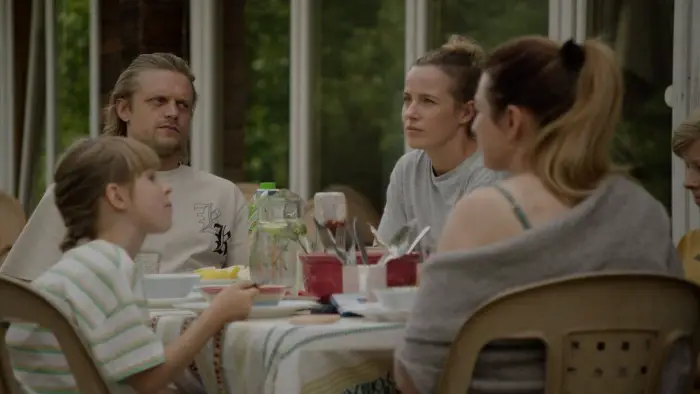
Screenshot from Drowning Dry.
“…I was very much intrigued by the possibility of suffocating while not underwater.”
FT: In those same sequences, two songs play a prominent part. Why those two songs and how early in pre-production, shooting, or post did it take to find the perfect music cues for the moment?
LB: Those are a couple of songs that got stuck in my head from early adolescence, when there was only one music channel on TV. This forced you to listen to the same songs over and over again. I imagined the sisters experienced the same thing and would take it further and stage dance routines. I had the preferred songs long before the shooting, and we started the process of clearing the rights half a year before. But as it usually happens, not everything went to plan, and we ended up shooting the scene with eight different songs, because we did not have the rights cleared on the day of the shoot. We have the scene with Atomic Kitten – Eternal Flame and Ronan Keating – Life is a Roller Coaster, among others. I did this because I wanted the songs to be played on set and the sisters to lip sync, not just added in post. Funny thing is, we got the rights to the songs the next day.
FT: The narrative seems to be a simple slice-of-life observation of these family members. And then it is not. What was your thought process like to lure in audiences with something that feels safe until pulling the rug out from everyone, audience and characters alike?
LB: Just like in real life, something is normal until it’s not anymore. You never know what genre is going to be your day. I wanted the same thing for Drowning Dry. We start off as a simple vacation house family drama, and then it spirals. I had a similar thing happen in my life. A jump from a cute toddler parenting coming-of-age comedy to an existential horror gave me a lot to think about.
FT: What was the key inspiration to write the film, and how much does the final product represent that initial vision? How much changed from draft to draft?
LB: A harrowing day involving my child was the starting point. It was not a drowning accident, but could have ended just as tragically. I’m thankful it didn’t, but it did leave me with a sort of PTSD. It was hard to admit it, because there was no factual reason for it. The first drafts were way more violent. Through various iterations, I removed the most disturbing parts to make it more relatable. Also, the girl died in the first draft; the narrative was way darker initially. Somewhere along the way, I decided I didn’t want to be that person who kills a little girl in his film.